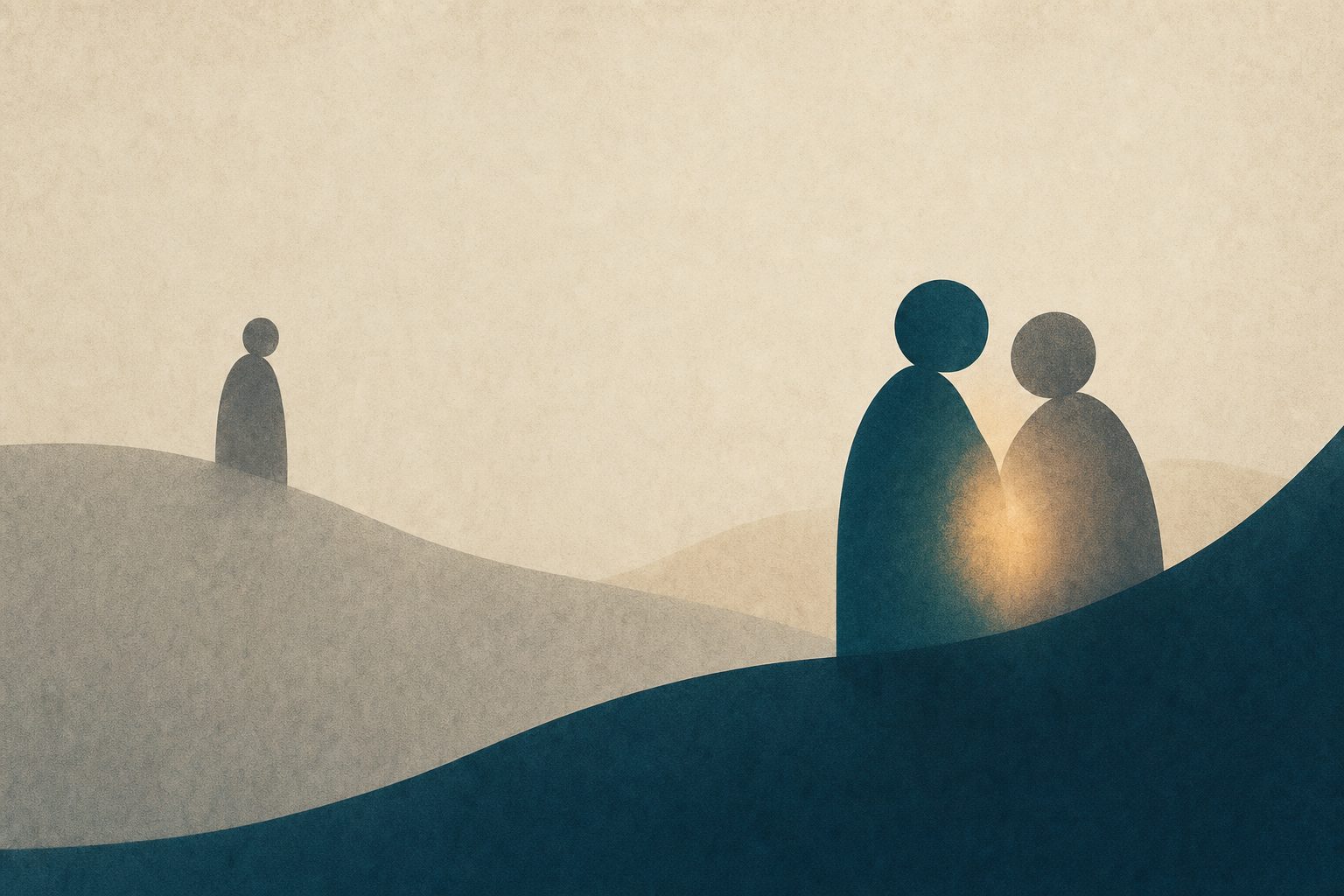
Benzodiazepine tapering is often described as a physical process, a slow lowering of the medication over weeks or months. Yet many people who go through it discover that the hardest hours are not only physical. They are also lonely. When the nervous system feels frightened and over-activated, being alone can make every symptom louder, while the simple presence of another calm person can quiet the storm.
For many people in withdrawal, human contact eases suffering more than any single tool, technique, or comfort measure. Understanding why this happens, and how to keep some connection alive even when energy is low, can change the experience of a taper.
Why Isolation Makes Withdrawal Worse
During withdrawal, the nervous system can become highly sensitized. The body reads ordinary moments as threats, and the alarm system stays switched on. In that state, the mind looks for danger and finds it everywhere, including inside the body itself.
When a person is alone with this experience, there is nothing to interrupt the loop. Fear feeds attention, attention magnifies sensation, and sensation feeds more fear. A racing heart or a wave of dread becomes the only thing in the room.
Isolation also removes the quiet feedback that tells us we are safe. A familiar voice, a shared meal, or someone reading nearby sends a signal to the body that the moment is survivable. Without those signals, the brain has fewer reasons to stand down.
Rumination tends to grow in empty rooms. Hours alone give worry a stage, and the same frightening thoughts circle again and again. The longer this continues, the more permanent the suffering can feel, even when symptoms are actually shifting.
None of this means a person in withdrawal is weak or doing something wrong. Physical dependence on a prescribed medication is a medical condition, not addiction, and a sensitized nervous system is a medical state rather than a character flaw. The human nervous system was built to settle in the company of others, and withdrawal strips away that natural buffer at the very moment it is needed most.
It also helps to remember that this effect is not imagined. The body genuinely responds to the absence of others by staying more alert, more guarded, and more prepared for threat. Beyond being unpleasant, isolation shapes the physiology of how the days feel.
How Connection Calms an Over-Activated Nervous System
Humans regulate one another. A steady, unhurried presence can help a frightened body slow down, a process sometimes called co-regulation. We borrow calm from people who are calm, the same way an anxious child settles in the arms of a relaxed parent.
This works through tone of voice, facial expression, breathing, and simple proximity. The signals do not have to be dramatic. A soft voice saying that this wave will pass can reach the body in a way that private reassurance often cannot.
Connection also redirects attention outward. When someone is present, the mind has somewhere to go besides the next symptom. Even a brief conversation about something ordinary can loosen the grip of internal focus.
There is also the matter of meaning. Being witnessed by another person tells the suffering part of the brain that the experience is real, shared, and temporary. That sense of not being alone can lower fear faster than any explanation.
This is why, for many people, presence does more than the usual list of comfort measures. It does not remove the symptoms, but it changes the body’s interpretation of them, and that interpretation is a large part of how much they hurt.
Co-regulation is also part of why a taper feels uneven when a person spends some days connected and other days completely alone. The same symptom can feel manageable in the morning beside a calm companion and overwhelming in an empty house that night. The difference is often the presence or absence of another nervous system to lean on rather than the symptom itself.
The Pull Toward Isolation
Withdrawal pushes people away from contact at exactly the wrong time. Low energy is a major reason. When even small tasks feel exhausting, reaching out to another person can seem impossible.
Sensory overwhelm is another force. Bright lights, noise, and busy conversation can feel painful to a sensitized nervous system, so a person retreats to a dark, quiet room to protect themselves. The retreat is understandable, yet it can slide into total isolation.
Shame plays a quiet but powerful role. Many people feel embarrassed by their symptoms or by how long the process is taking. They worry about being a burden, so they pull back rather than risk being seen in a fragile state.
Fear of being misunderstood adds to this. People who have tried to explain withdrawal and met blank stares or doubt often stop trying. Silence starts to feel safer than another conversation that leaves them feeling more alone.
There is often a sense of time distortion as well. Days alone tend to blur together, and without the natural rhythm that other people bring, a person can lose track of how far they have come. That blur makes the experience feel endless, which adds its own layer of distress.
Together these forces create a trap. The very symptoms that would ease with connection are the symptoms that make connection feel unbearable, and so isolation deepens.
The Cost of Going It Alone
When isolation takes hold, the taper itself can become harder to sustain. Without support, frightening days can lead a person to lose faith in the process or to speed up changes in a way that backfires.
The emotional cost is steep. Long stretches of solitude can turn a difficult season into a despairing one, and despair makes every symptom feel heavier and more permanent than it is. If despair ever turns into thoughts of harming yourself, call or text 988, the Suicide and Crisis Lifeline, or call emergency services.
Isolation also hides progress. A trusted person on the outside often notices small improvements that the person cannot see, such as a slightly longer good stretch or a calmer voice. Alone, those signs go unrecorded.
The strain reaches loved ones as well, who may feel shut out and helpless. Understanding the emotional toll on families helps everyone see that connection protects the whole household, not only the person in withdrawal.
There is a quieter cost as well, the loss of small joys. Shared laughter, a familiar routine, and ordinary human warmth all help anchor a person to the life waiting on the other side of withdrawal. When those moments disappear, it becomes harder to remember why the effort is worth it.
Recognizing these costs adds no obligation. It simply makes the case that protecting even a thread of human contact is one of the most practical things a person can do during a taper.
Realistic Ways To Stay Connected
Connection during withdrawal does not have to be large or social. The goal is low-demand contact that asks very little while still offering presence. A person can stay connected without performing, hosting, or explaining themselves.
Start with one trusted person. One person who understands the situation, even loosely, can become an anchor. That person might simply sit nearby, send a short message in the morning, or be available by phone during the hardest part of the day.
Lower the bar for contact on purpose. A text that says only “thinking of you” or a quiet visit with no need to talk can be enough. Agreeing in advance that silence is allowed removes the pressure to perform wellness.
Communities who understand withdrawal can also help, whether online or in person. Being among others who recognize the experience reduces the isolation of feeling like the only one. A few words from someone who has walked the same road can carry more reassurance than a great deal of well-meaning advice from people who have not. Loved ones can learn what families and caregivers can do so the support is steady rather than draining.
It can help to let people know in advance what kind of support is useful. Some people want company and quiet, while others want gentle distraction or a voice on the phone. Saying so ahead of time spares everyone the guesswork on a difficult day.
It helps to plan connection ahead of time, while thinking is clearer. Naming one or two people and a few simple ways to reach them means that on a frightening day, the path back to contact is already there.
A Gentle Way Forward
No one needs to overhaul their social life to benefit from human contact during a taper. Small, steady, low-pressure connection is enough to give the nervous system the signals of safety it is searching for.
On the hardest days, the most healing thing may simply be another calm person in the room. That presence does not erase withdrawal, but it can make it survivable, and survivable is the goal that matters. The aim is to feel a little less alone with what is hard, not to feel perfectly well.
Healing from benzodiazepine withdrawal tends to come in waves, and the people who walk alongside a person make those waves easier to ride. One trusted person, reached even imperfectly, is usually enough to begin.
This article is educational. It is not medical advice, and reading it does not create a doctor-patient relationship. Decisions about starting, continuing, or tapering any medication should be made with your own physician.