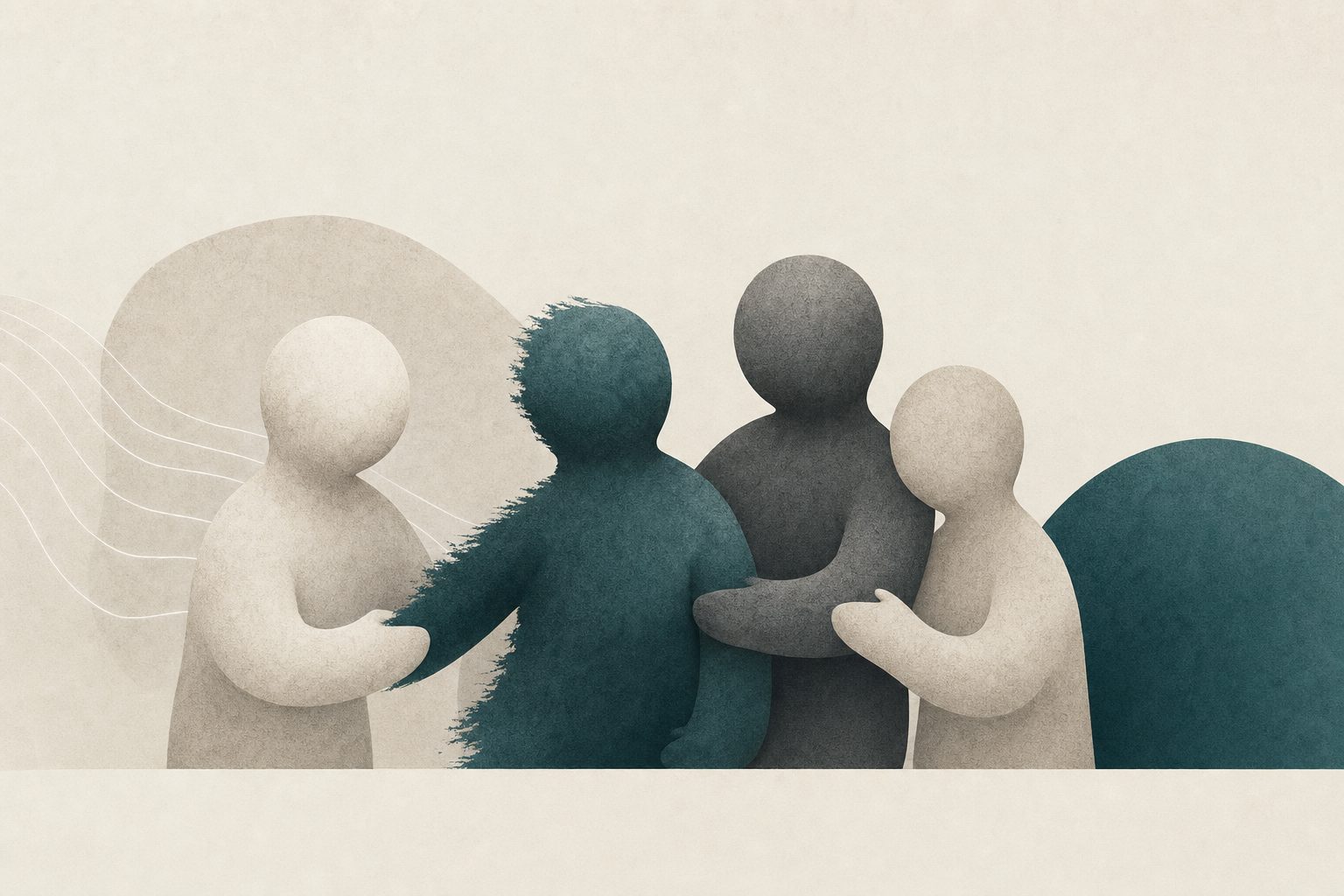
When a person is in benzodiazepine withdrawal or living with BIND (Benzodiazepine-Induced Neurological Dysfunction), the difficulty does not stay contained inside one body. It moves through the whole household. Spouses, partners, children, parents, and close friends all feel the shift, often without the language to name what is happening or the certainty that it will ever end.
Families are frequently overlooked in conversations about healing, yet they carry a real and heavy load. Validating their experience does not take anything away from the person who is suffering. It simply tells the truth about how far the strain reaches and helps everyone find steadier ground together.
The confusion of watching someone change
One of the hardest parts for family members is the sense that the person they love has become unfamiliar. A calm partner may grow anxious and restless. An easygoing parent may seem fearful, tearful, or unreachable for long stretches.
This change rarely arrives all at once. It tends to come in waves, with better days that raise hope and harder days that pull it back down. The unpredictability can leave loved ones feeling off balance, never sure which version of the person they will meet that morning.
Because BIND affects the nervous system, the symptoms are real even when no outward injury is visible. Family members sometimes wonder if the person is exaggerating, or if the problem is purely emotional. Understanding that the brain and body are genuinely recalibrating helps replace doubt with compassion.
Many families also feel the gap between how the person looks and how they feel. From the outside, a loved one may appear physically fine, which can make the depth of their distress hard for others to accept. Inside, that same person may be enduring symptoms that touch sleep, mood, memory, and the simplest daily tasks.
It helps to remember that confusion is a normal response to an abnormal situation. A household that feels lost is not failing. It is responding honestly to something that few people, including many clinicians, fully understand.
Fear, grief, and the loss of the familiar
Underneath the daily strain, many family members carry a quiet grief. They miss the person as they were before symptoms took hold, even though that person is still right there in the home. This kind of loss can be especially confusing because there is nothing concrete to mourn.
Fear often sits alongside the grief. Loved ones may worry about how long healing will take, whether things will return to normal, and how the family will hold together in the meantime. These worries can circle endlessly, especially late at night.
Children feel these currents too, even when adults try to shield them. A young child may not understand why a parent is tired or irritable, and may quietly assume they have done something wrong. Simple, honest reassurance, offered at a level a child can absorb, goes a long way.
Some loved ones also feel guilt, wondering whether they could have noticed something sooner or done something differently. This guilt is usually unearned, because no one chooses this path on purpose, and hindsight makes the past look clearer than it ever was. Letting go of blame frees energy for the work of supporting one another now.
Naming grief and fear out loud can ease their grip. When a family allows itself to say, gently, that this season is painful and frightening, it stops pretending and starts coping. Honesty within the home tends to lower the pressure rather than raise it.
Irritability, conflict, and not taking it personally
Withdrawal and BIND can bring sharp mood changes, including irritability, sudden tears, and at times intense anger or rage. These reactions can land hard on the people closest to the person, who may feel they are walking on eggshells in their own home.
These surges are driven by a nervous system under strain, not by a change in how the person truly feels about their family. The intensity is a symptom, much like fatigue or insomnia, rather than a verdict on the relationship. It helps to be clear about what the family is dealing with: physical dependence on a prescribed medication is a medical condition, not addiction. The injury is a medical one, caused by a medication taken as directed, and it is not a change in who the person is.
This understanding does not mean family members must accept mistreatment or ignore their own limits. It means they can avoid the trap of personalizing every harsh word. Responding to a symptom with calm, rather than meeting it with matching heat, often keeps a hard moment from becoming a lasting wound. If a moment ever turns toward violence, or the person speaks of harming themselves, that is not something to wait out at home: call 988 or emergency services.
The person experiencing these surges often feels the worst of it. Many describe deep regret after a sharp moment, along with fear that they are pushing away the people they need most. Knowing that the family understands the difference between the symptom and the self can lift a real weight from their shoulders.
Conflict will still happen, because no household stays perfectly patient under months of stress. What helps is repairing afterward, naming what was the illness and what was simply human, and forgiving on both sides. The goal is a forgiving home rather than a flawless one.
Isolation, caregiving, and practical strain
Few conditions are as isolating as one that others cannot see and rarely understand. Family members often stop explaining, because friends and even relatives may respond with confusion or unhelpful advice. Over time, the household can drift into a quiet loneliness.
Caregiving adds its own weight. A partner may take on extra duties at home, manage appointments, absorb the emotional ups and downs, and still try to keep working and parenting. This load is real, and ignoring it does not make it lighter. Attending to supporting the caregiver is part of helping the whole family come through this, and never a distraction from the patient.
Daily routines often shift in ways that surprise everyone. Plans get canceled, social invitations go unanswered, and the household may pull inward to protect the person who is unwell. Friends sometimes drift away simply because they do not know how to help, which can sting even when no harm was meant.
Financial pressure can deepen the strain. Reduced work hours, added costs, and the general slowdown of a household in survival mode can create worry that compounds the emotional toll. These practical concerns deserve open, honest conversation rather than silent dread.
Connection is one of the strongest counterweights to isolation, and the role of human contact matters for the whole household, not only the person tapering. A trusted friend, a supportive community, or even a single person who simply believes the family can ease the sense of being alone in something invisible.
Patience, communication, and holding steady
Patience is easy to recommend and hard to live, especially when the road is long. Yet patience is often the single most valuable thing a family can offer, because healing from withdrawal and BIND tends to move on its own timeline rather than a convenient one.
Clear, gentle communication helps everyone feel less alone inside the experience. Short check-ins, honest statements about how each person is doing, and permission to have a hard day without explanation can keep small frustrations from hardening into resentment.
Family members also need their own outlets and rest. Caring for someone in distress while neglecting one’s own basic needs is not sustainable, and it does not serve the person who is suffering. Protecting a little time, sleep, and support is not selfish; it is what keeps a caregiver standing.
It often helps to learn together about what withdrawal and BIND involve. When the whole family shares a basic understanding of what the nervous system is going through, no one has to carry the burden of explanation alone. Shared knowledge turns a private struggle into a common one.
It can help to set small, realistic expectations rather than waiting for everything to return to normal at once. A slightly easier afternoon, a shared laugh, or a calmer evening is worth noticing. These small markers remind the household that the situation is not frozen in place.
The picture improves as the nervous system settles
For most people, the nervous system gradually settles as healing continues. The waves of symptoms tend to grow less frequent and less severe over time, even when progress is uneven and hard to see from one day to the next.
As the person stabilizes, the household usually finds its footing again. The familiar warmth, humor, and steadiness that seemed lost often return, sometimes slowly and sometimes in surprising bursts. Families who held on through the hardest stretch frequently describe coming out closer than before.
Healing also reshapes the family in lasting ways. Many households learn to communicate more openly, to ask for help sooner, and to value their ordinary good days more than they once did. The hard season, painful as it is, can leave behind a steadier and more honest way of being together.
The strain a family carries during this season is real, and so is the suffering of the person at its center. Both deserve compassion, and neither cancels out the other. Holding both truths at once is part of how a household survives intact.
This article is educational. It is not medical advice, and reading it does not create a doctor-patient relationship. Decisions about starting, continuing, or tapering any medication should be made with your own physician.